Deep Brain Stimulation for Movement Disorders
A Guide for Patients
Deep Brain Stimulation (DBS) is a surgical treatment that uses gentle electrical signals to help control symptoms of certain neurological conditions when medicines are no longer enough.
Who Can Benefit?
DBS is most commonly used for:
- Parkinson’s Disease
- Essential Tremor
- Dystonia
It may also be used in selected cases of:
- Chronic Pain
- Epilepsy
- OCD (Obsessive-Compulsive Disorder)
How Does DBS Work?
Certain brain conditions cause irregular signals. DBS helps by:
- Modulating (adjusting) these signals
- Restoring more normal brain activity
- Improving movement and quality of life
Symptoms DBS Can Improve
- Tremors (shaking)
- Slowness of movement
- Stiffness
- Involuntary movements (dyskinesia)
- Medication-related fluctuations
Important: DBS helps control symptoms but does not cure the disease.
The Procedure
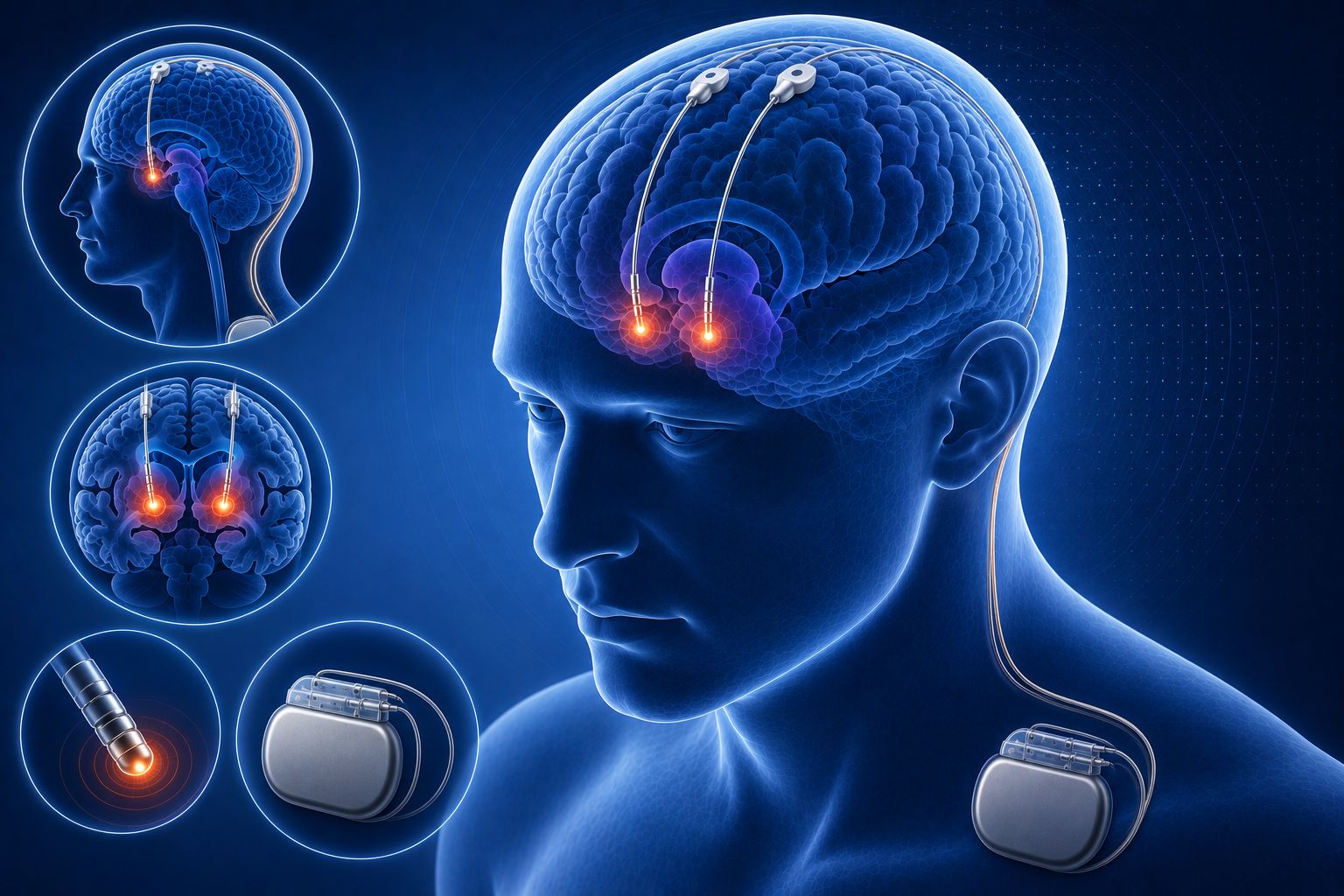
1. Brain Electrode Placement
- Electrodes are placed precisely in specific areas of the brain using advanced imaging guidance.
- You may be awake or asleep depending on the case.
2. Battery (Pulse Generator) Placement
- A small device is implanted under the skin near the chest.
- It is connected to the brain electrodes.
After Surgery
- The device is programmed a few weeks after surgery.
- Settings are adjusted gradually to get the best results.
- Regular follow-up visits are needed.
- It may take time to see the full benefits.
Benefits of DBS
- Significant improvement in movement symptoms
- Reduced need for medications in some patients
- Better day-to-day functioning
- Improved quality of life
Risks and Possible Side Effects
- Infection
- Bleeding in the brain (rare)
- Device-related issues (e.g., lead or battery problems)
- Speech or balance changes (usually adjustable)
Your doctor will discuss these risks in detail.
Is DBS Reversible?
Yes. DBS is adjustable and reversible.
- The stimulation can be changed or turned off.
- The system can be removed if needed.
Will I Still Need Medications?
Most patients will still need medications, but often at lower doses.
Who Decides if DBS is Right for Me?
A team of specialists will carefully assess you, including:
- Neurologist
- Neurosurgeon
- Neuropsychologist
to determine if DBS is suitable for you.
Key Takeaway
DBS is a safe and effective treatment that can significantly improve symptoms and quality of life when medications are no longer enough.
Deep Brain Stimulation (DBS) Consultation
For comprehensive evaluation and management of Parkinson’s disease, dystonia, essential tremor, and other movement disorders, consult Dr. Sneha Chitra, Consultant Neurosurgeon with Fellowship Training in Functional Neurosurgery (UK).
Dr Sneha Chitra specializes in Deep Brain Stimulation (DBS), offering expert patient selection, individualized surgical planning, advanced image-guided DBS programming, and long-term optimization of therapy. Using the latest DBS technologies, including directional leads, treatment is tailored to maximize symptom control while minimizing side effects.
Early evaluation for DBS can help identify the right patients at the right time, leading to better outcomes and an improved quality of life.

