Headache Disorders
Advanced Minimally Invasive Treatments for Chronic Headache Disorders
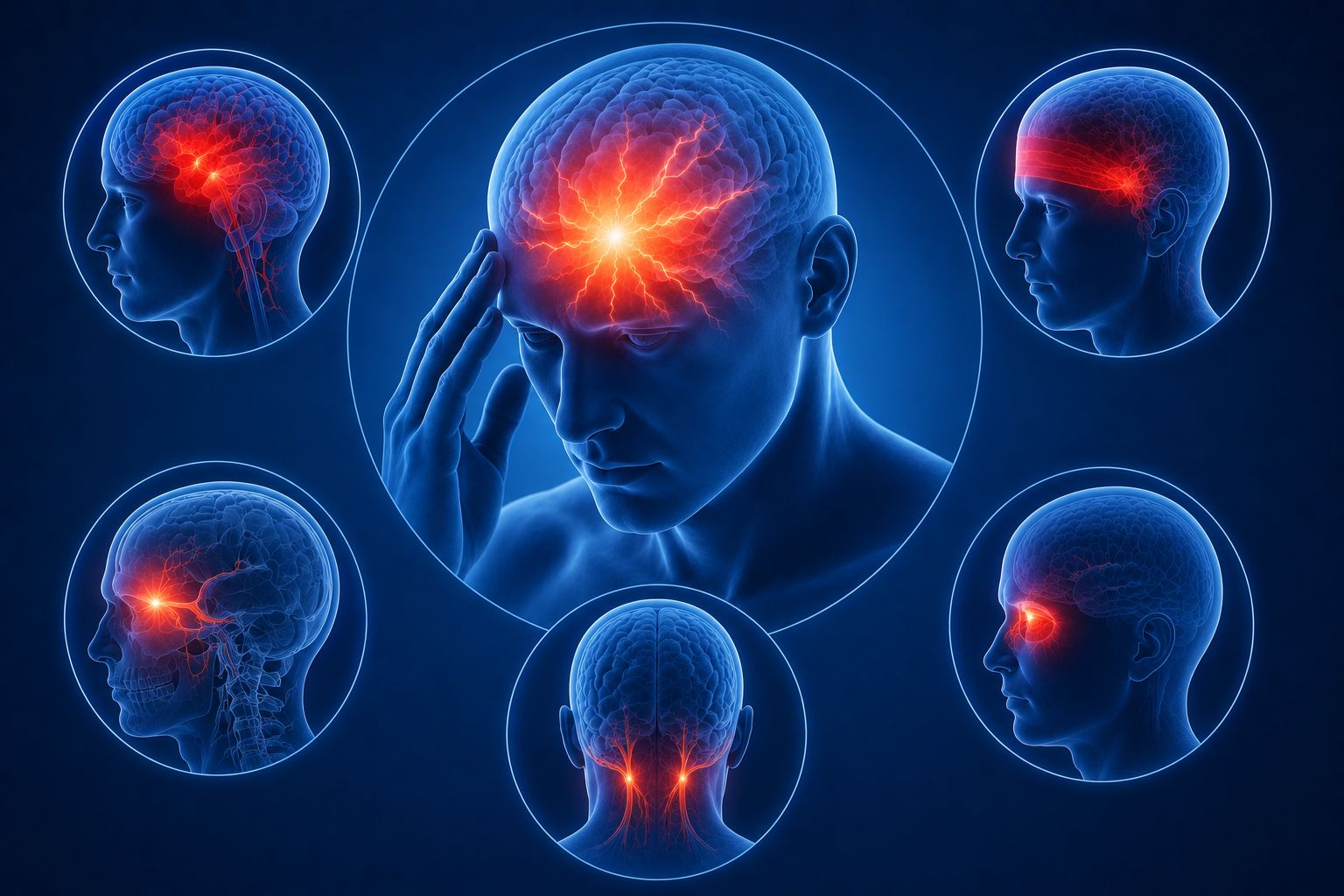
Headache disorders such as migraine, cluster headache, and occipital neuralgia can significantly affect quality of life, work, sleep, and emotional well-being.
Modern interventional pain therapies offer targeted, minimally invasive treatment options for selected patients with chronic or refractory headache disorders.
Using Doppler ultrasound and image-guided techniques, these procedures precisely target pain-generating nerves and pathways with improved accuracy and safety.
Conditions Commonly Treated
Migraine
- Chronic migraine
- Refractory migraine
- Severe headache with scalp tenderness or occipital pain
- Medication-resistant headache
Cluster Headache
- Severe unilateral headache attacks
- Recurrent “suicide headaches”
- Episodic or chronic cluster headaches
Occipital Neuralgia
- Sharp, shooting pain from the back of the head
- Scalp tenderness
- Burning or electric shock-like pain
- Pain radiating from the neck to the scalp or behind the eye
Cervicogenic Headache
- Headache arising from the upper cervical spine
- Neck pain associated with headache
- Pain worsened by neck movement
Doppler-Guided Occipital Nerve Blocks
What Is an Occipital Nerve Block?
Occipital nerve blocks target the greater and lesser occipital nerves located at the back of the scalp.
Using Doppler ultrasound guidance, the nerves and surrounding blood vessels are identified precisely before medication is administered.
Conditions Treated
- Chronic migraine
- Occipital neuralgia
- Cervicogenic headache
- Post-traumatic headache
Benefits
- Targeted pain relief
- Reduction in headache frequency and severity
- Improved sleep and daily functioning
- Minimally invasive outpatient procedure
- Doppler guidance improves precision and safety
Image-Guided C2 Nerve Root Blocks
What Is a C2 Block?
The C2 nerve root and associated upper cervical structures can contribute to severe headache syndromes, particularly occipital and cervicogenic headaches.
Symptoms Suggesting Upper Cervical Origin
- Pain beginning in the upper neck or occiput
- Headache radiating to the scalp or eye
- Headache worsened by neck movement
- Persistent occipital pain despite medication
Advantages
- Highly targeted therapy
- Useful in diagnosis and treatment
- Can reduce severe occipital and cervicogenic pain
- Helps guide further treatment planning
Sphenopalatine Ganglion (SPG) Block
What Is the Sphenopalatine Ganglion?
The sphenopalatine ganglion (SPG) is a collection of nerves located deep behind the nose and plays an important role in several severe headache disorders, particularly cluster headache.
Common Indications
- Cluster headache
- Refractory migraine
- Facial pain syndromes
- Trigeminal autonomic cephalalgias
Benefits
- Rapid relief in selected patients
- Reduction in headache intensity and frequency
- Minimally invasive
- Useful adjunct to medical therapy
Why Image Guidance Matters
Modern image-guided interventions improve:
- Precision
- Safety
- Accurate medication delivery
- Diagnostic accuracy
- Treatment effectiveness
Doppler ultrasound and fluoroscopic imaging help visualize nerves, surrounding vessels, and anatomical landmarks in real time.
What to Expect During the Procedure
Before the Procedure
- Clinical evaluation and headache assessment
- Review of imaging and medications
- Discussion of risks and expected outcomes
During the Procedure
- Usually performed under local anaesthesia
- Mild sedation may occasionally be used
- Image guidance ensures accurate needle placement
- Most procedures take 15–45 minutes
After the Procedure
- Short observation period
- Same-day discharge in most patients
- Gradual return to normal activity
Are These Procedures Safe?
These procedures are generally safe when performed by experienced specialists using imaging guidance and sterile technique.
When Should You Consider Interventional Headache Therapies?
You may benefit if:
- Headaches remain disabling despite medication
- Headache frequency is increasing
- Pain affects work, sleep, or quality of life
- You experience medication side effects
- There is associated neck or occipital pain
- Headaches have become chronic or refractory
Comprehensive Headache & Facial Pain Care
Treatment is individualized and may include:
- Lifestyle and trigger modification
- Medication optimization
- Preventive therapies
- Physiotherapy and posture correction
- Interventional pain procedures
- Multidisciplinary headache care
The goal is not only headache relief, but restoration of function, productivity, and quality of life.
Book a Consultation
For evaluation of chronic headache, migraine, cluster headache, occipital neuralgia, or facial pain syndromes, consult Dr. B. Sneha Chitra, specialist in Functional Neurosurgery, Neuromodulation, and Advanced Pain Management.

